

It was three days past when I originally planned to arrive in San Francisco. If I had adhered to the loose plan I’d devised before I left L.A., I would likely have been visiting some winery in Napa or Sonoma. Yet, as each day of my journey had presented itself, more and more I was enjoying the road’s promise of absolute spontaneity. As I’ve said before, I’m a planner by nature, but this new travel-style was coming easily to me. I still didn’t have any idea where I was going to lay my head for the night, and it was already nearing four. Like that morning’s last-minute decision to visit San Simeon, it excited me. I found it exhilarating not knowing what my journey held from one moment to the next.
As I walked back to my car along Moonstone Beach Boardwalk, having overcome the profound disappointment of not being able to explore at Nitt Witt Ridge, I faced the prospect of a four-plus hour drive to San Francisco. The last few days had left me drained, and the thought of settling into my hotel room sometime around nine didn’t appeal to me in the least. But a moment later, just as I reached my Eclipse and pulled my phone from my pocket ready to search for a hotel, I recalled a link I had noticed on Trip Advisor earlier in the afternoon. For some reason it had stuck with me, even though it was just now registering, and seemed mildly interesting when I’d seen it. Now, in a moment blooming with hesitation, it felt like fate sending up a flare. It was a good thing that my revised itinerary meant I didn’t need to be in San Francisco until Tuesday, because once again I was going to alter my plans.
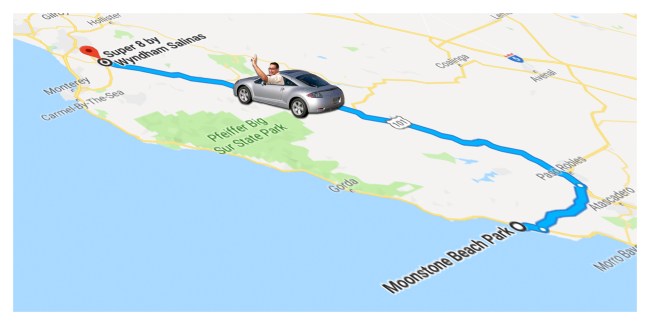
It took me about an hour to backtrack to Paso Robles. There I headed north on the 101 Freeway, but it wasn’t too long before my fatigue finally got the best of me. I pulled off the road near Salinas, into the parking lot of an In-N-Out Burger, where I scoured my apps for a good deal on a place to stay. Fifteen minutes later I checked into the Super 8 Motel that was serendipitously just a few doors away. I was sound asleep less than an hour after eating dinner.
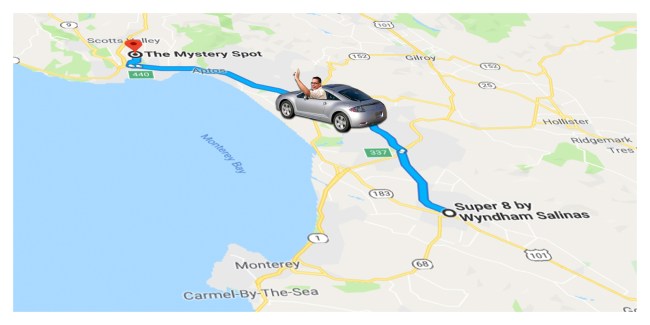
The next day I woke reenergized, and was greeted by the first rainy morning of my trip. Coupled with the cold and wind, it made loading my car even more of a chore than usual, but shortly after my noon checkout, as I continued north on the 101, the sun started to peek through the clouds. It was a good thing too, because rain might have spoiled some of the enigmatic promise of the roadside attraction where I was headed, a curious little place appropriately called The Mystery Spot.
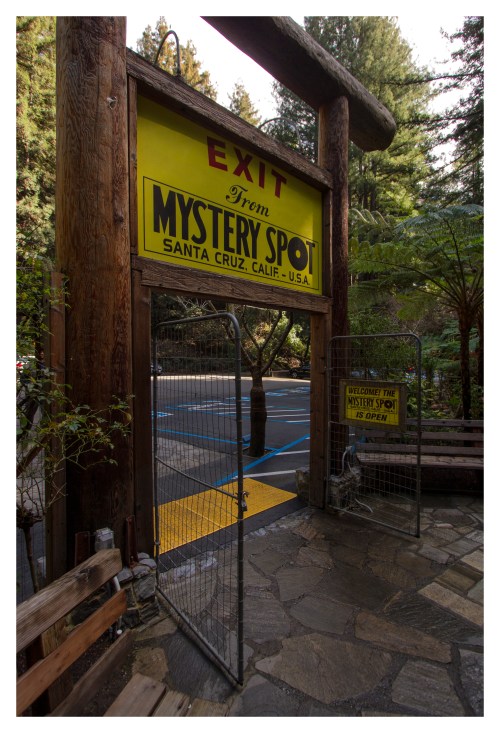
The first thing I feel obligated to note about my destination is its driveway, which leads visitors from a windy country road outside Santa Cruz into the woods towards its parking lot. It wasn’t mysterious, per se, except maybe in the sense that a person might wonder how it could have gotten so bad. I’m from the northeast, a place of snowplows and apocalyptically inclement winters if you ask my mother, and I don’t think I’ve ever seen a similar dirt road outside of an extreme off-road race intended for 4x4s. It made my Mitsubishi Eclipse, which sits about 3.46 inches off the ground, more than ill-suited for the task. This suspension-challenging excursion from hell went on for so long it felt like I might emerge somewhere in the forests of Germany, or possibly Endor.
“One ticket for the tour, please,” I told the cashier once I reached the front of the line inside The Mystery’s Spot’s gift shop.
“That’ll be thirteen dollars,” the young lady behind the counter told me.
“How much?” I asked incredulously.
“Thirteen,” she repeated. “Eight for the tour, and five for parking.”
“You charge for parking?”
“Yes,” she told me. “Five dollars.” I had been there five minutes and already I’d discovered the secret of The Mystery Spot.
“You charge five dollars for parking?” I said, growing agitated. “After turning me into the milkshake formerly known as a human being with that driveway of yours. I take it the five dollars is an offering to the mystery, because it certainly doesn’t go towards repairs.” The girl eyed me for a moment. I could tell she agreed with me, but professional decorum meant she couldn’t come right out and say so.
“If you want to take the tour,” she said apologetically. I gruffly considered my options, before hesitantly forking over a twenty-dollar bill.
“It’s five dollars extra for the tour guide,” she told me. “Would you like one of those too?” All I could do was glare at her, while trying to determine the likelihood that she was giving me a taste of my own smart-ass-ery.
“You’re messing with me, right?” I asked tentatively.
She squinted and tilted her head to one side, looking helplessly confused. I was more than ready to open up my Big Book of Diatribe and read a passage aloud when her face broke into a bright big smile. “Yes, I’m kidding,” she said with a giggle, then added, “It’s the sidewalks that cost extra.”
“Ha. Ha.” I said, impressed with her ability to diffuse the miser in me.
Once I had my ticket I waited in the small courtyard outside the gift shop for my tour to begin, the entire time telling myself that while it might have been overly expensive, at least these people made an effort to show up for their advertised offerings, unlike those who ran Nitt Witt Ridge.
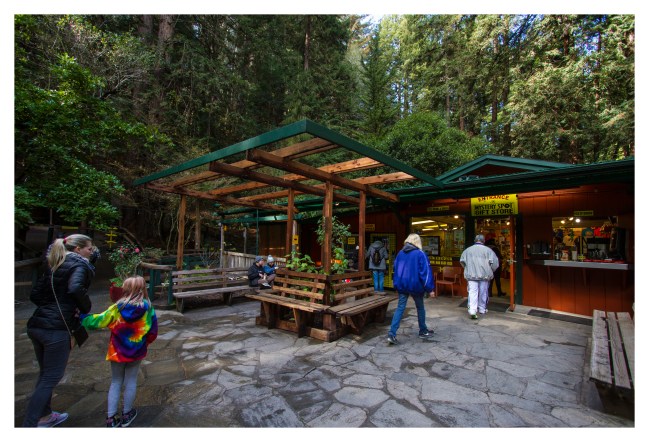
About fifteen minutes later a man in his twenties, who was dressed in what looked like a park ranger’s uniform, met my tour group in the courtyard. His baby face stood in stark contrast to his patchy chinstrap beard, that for some reason went under his throat instead of following his jaw line. After leading us about ten yards from the gift shop along a nearby sidewalk, one that eventually wound its way up the steep hill ahead of us and ended at a ramshackle cabin that was warped in odd and contradictory angles, he began the tour.
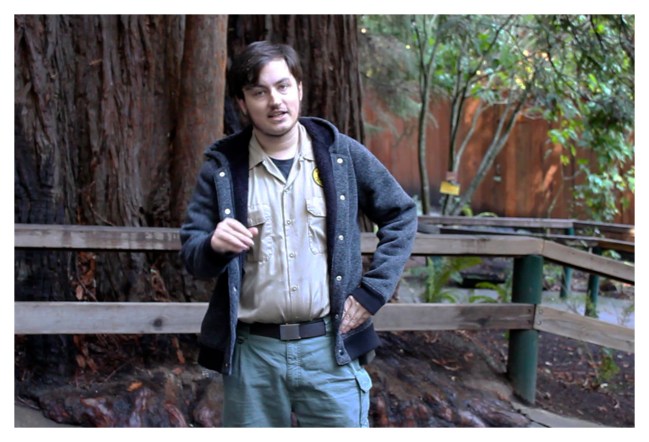
“My name is Jack,” he told us, “And welcome to The Mystery Spot. You can remember my name very easily,” he continued, his delivery droll but practiced. “Jack Be Nimble. Jack Daniels.” Everyone was slightly amused, including me, but I was also hard at work winding my dreck-trometer. What can I say? While I was optimistic about the prospect of the tour, I was also slightly more than skeptical about the plausibility of The Mystery Spot. It’s very name inferred ambiguity, and possible subterfuge – and for a profit. While I appreciate a little mystery in my life, I tend to prefer it in all the right places – like my Law and Order, my games of Clue, and my Science Theater 3000. But in a place like this I always feel compelled to keep an eye out, looking for any seams, strings, holes, or hooey.
The first thing Jack did was provide us a little history of the spot, and the mystery contained therein. A lumber company, he told us, sold the land to a man by the name of George Prather in 1939. Originally, Prather’s plan was to buy only the flat land, where I was presently standing and where my car was taking up five dollars’ worth of space, not the two large hillsides that flanked it. So, the lumber company appealed to his lust for a good deal, and offered to sell him the hillsides, which offered double the acreage, for half the price. Prather accepted, but the lumber company warned him not to try and build anything on one of the hillsides. They explained that if he did, it would inevitably slide down.
Prather assumed the folks at the lumber company were simply incompetent. That for whatever reason they were deficient the skills required to build a structure on the side of a hill, and decided the exact spot the lumber company had warned him about was the best place to construct his new hunting cabin. Even though he now had a surplus of land that he never expected to own, an entire other hillside in fact, Prather instead chose to build atop Slip-n-Slide Hill. It did however, quite serendipitously for George Prather, demonstrate the mysteriousness of The Mystery Spot.
Two months later, after Prather had watched his hunting cabin take a fifty-yard toboggan to where the aforementioned warped shack presently stood, he invited surveyors to come out and study the land. Jack told us these were the first people to notice the strange effects of The Mystery Spot. Not the lumberjacks, who had been unsuccessfully building on the hillside for God knows how long. Not George Prather himself, who watched his beloved hunting cabin relocated right before his eyes. No, according to Jack, it was the surveyors, an assertion that started my dreck-trometer squealing like a tween girl at a boy band concert.
I’ll admit that I may have been overly contrarian from the start. It was hard not to be, but it wasn’t until Jack explained the surveyors noticed their compass readings were off on the hillside, sometimes by just a couple of degrees and other times by a whopping 180 degrees, that my skepticism turned to suspicion. Jack didn’t produce a compass to demonstrate his point, which was something I found very odd, so I pulled out my phone, opened the compass app, and tested his claim for myself. My suspicion quickly turned to anger. Everything appeared to be in complete working order. It was the tiny spark that set off an irrational fire inside of me.
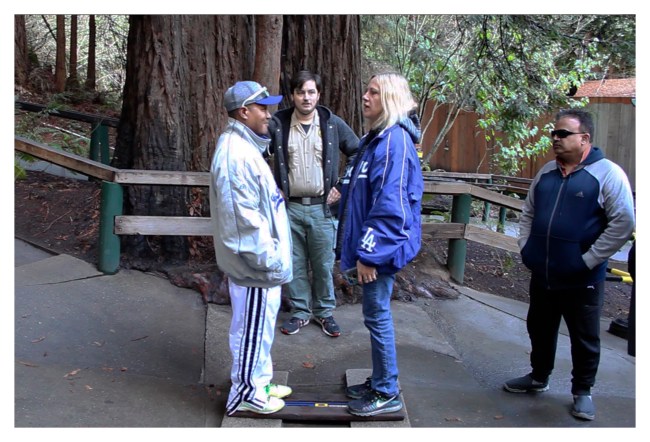
After that all I could I could see was smoke and mirrors, Scotch tape and Styrofoam, everywhere I looked. All I could hear was the little voice inside my head, which began to sound suspiciously like Yosemite Sam, as it yelled, “This guy’s not going to fool you. Who does he think he is?” While I knew deep down The Mystery Spot should just be a fun way to get lost in some modern “magic,” I couldn’t help but remind myself that I’m not entirely uninitiated when it comes to science stuff. “You’re a space nerd,” I told myself, “And a sci-fi geek. And you love the Discovery Channel. You can debunk his lies!” As Jack traced the border of The Mystery Spot with his index finger, which he explained had been discovered using the faulty compass readings, I rolled my eyes so furiously I teetered on the edge of a self-inflicted aneurism. Then, with a turn of his body and a motion of his arm, his demonstration bisected the very spot on which I stood. He’d been standing directly in front of me for the entirety of his speech, and on the ground between us two pieces of wood were positioned between two slabs of concrete.
“Everyone standing over here,” he told us with another motion of his arm, “Is outside The Mystery Spot. Everyone over here is inside The Mystery Spot. You sir,” he said pointing at me, “You’re on the border of The Mystery Spot. It might be little disorienting, but the effect only lasts two or three days.”
I felt nothing but fury.
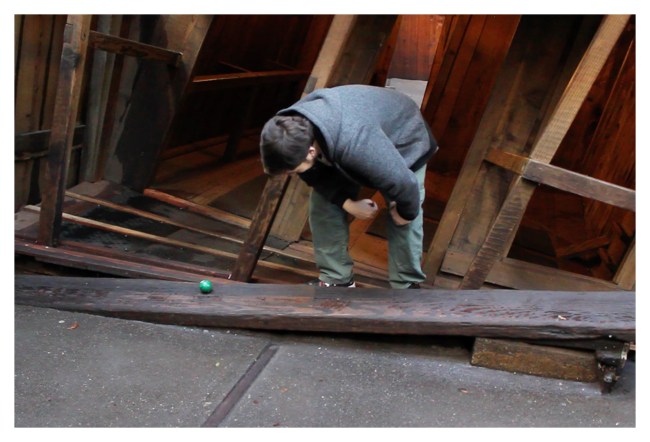
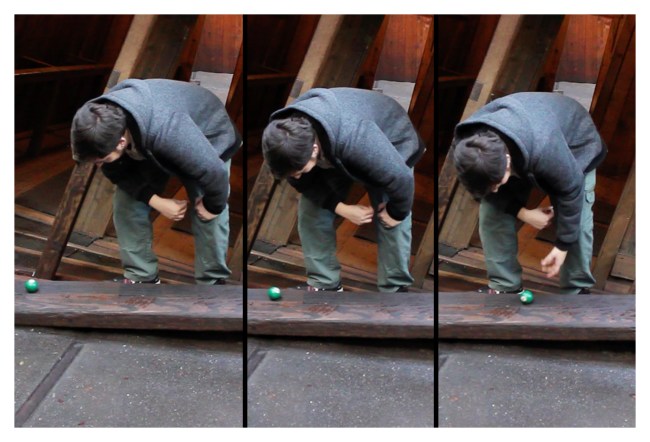
Jack pulled out a simple level, like those available at any Home Depot, and started twisting it in the air, to show us it was in perfect working order. The air bubble inside the little yellow cylinder moved back and forth freely as Jack tilted its ends up and down. It hadn’t been frozen or glued, but glided as one would expect. So when Jack put the level on each of the two pieces of wood that were balanced between the two concrete slabs, and the air bubble moved directly to dead center, I trusted they were indeed level.
“Now I need a couple of volunteers around the same height,” Jack announced, and tapped two people from our group; a man, who stood 5 feet 5 inches tall, and a woman, who stood 5 feet 7 inches. Jack positioned them face to face, each standing on the pieces of wood, the man inside The Mystery Spot, the woman outside. I was shocked to find that the man suddenly appeared almost the same height as the woman. In the opposite position, he was slightly taller. If I hadn’t been standing next to them for almost fifteen minutes while we waited for the tour to begin, and seen their difference in height for myself, I wouldn’t have believed it.
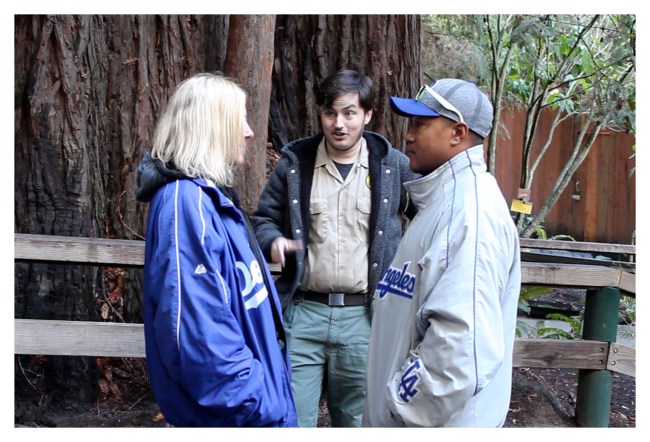
I knew there must be a reasonable explanation, probably some kind of optical illusion, but I struggled to put my finger on it. As Jack repeated the demonstration with different participants, I began to hate myself for not being smart enough to figure it out. By the time Jack announced it was finally time to head up to the shack that stood at the very center of The Mystery Spot, my mind was racing.
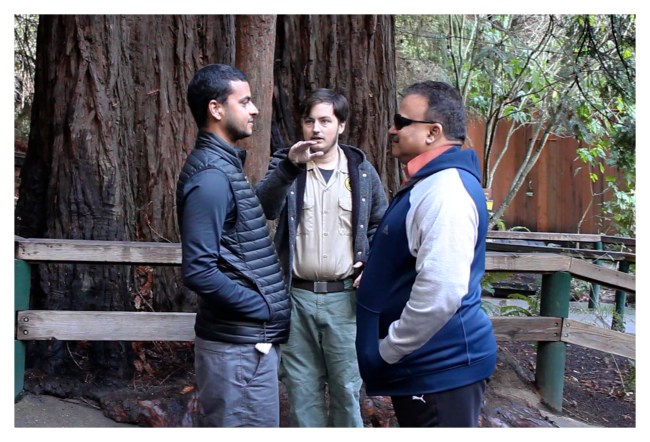
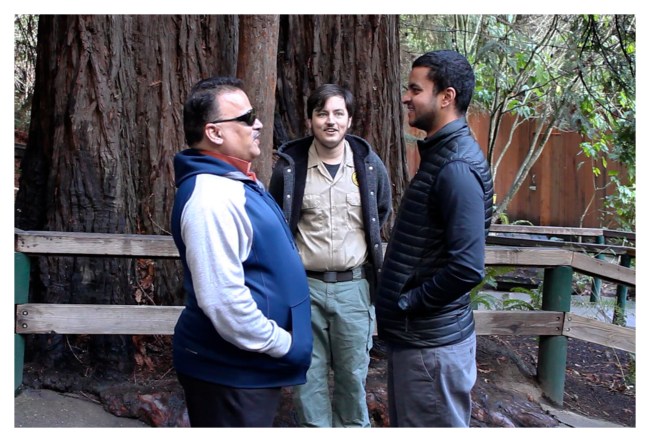
The moment I entered the cabin my equilibrium went berserk. I felt like I was being pulled in five different directions at once. My heart started racing, and I was sure my stomach had been turned inside out. My inner pragmatist wanted to chalk it up to forced perspective causing inner ear issues, or some other similar and explainable phenomenon, but nothing I could think of would account for the red alert my brain had issued to each of my other senses.
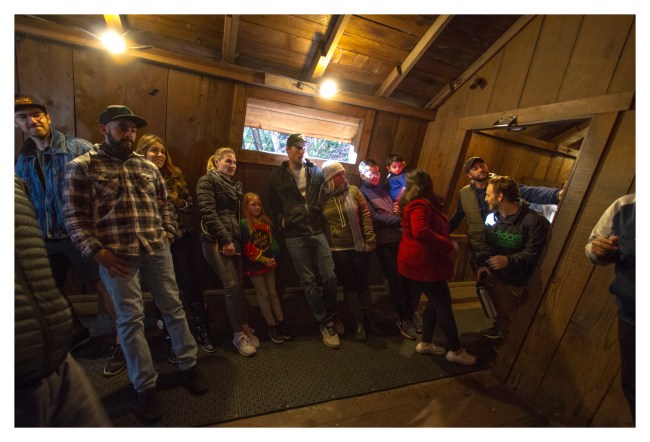
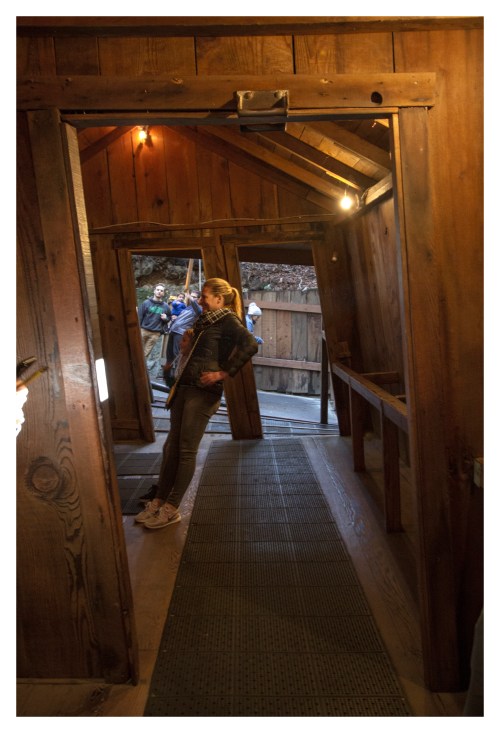
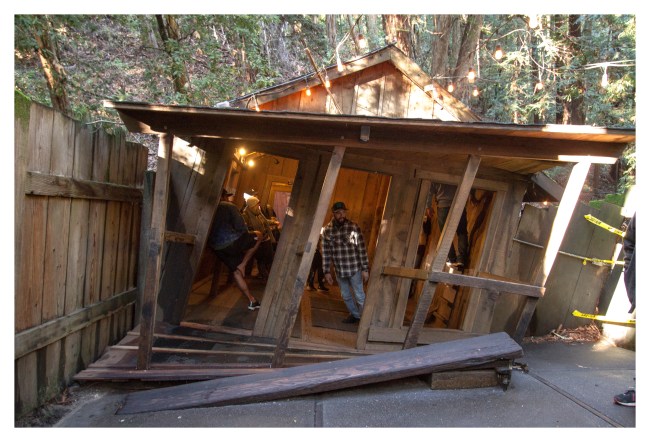
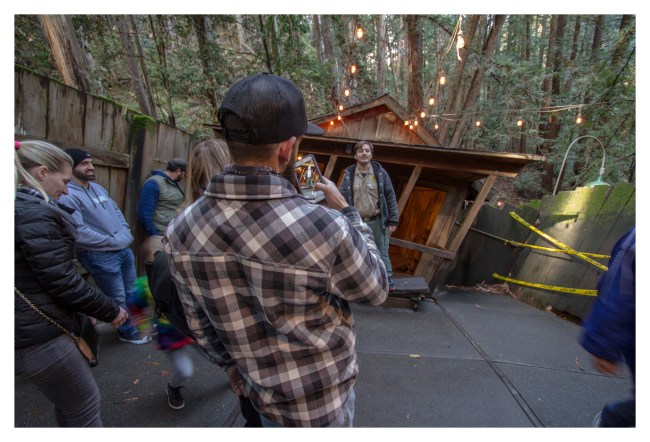
As we moved through the cabin, where I literally walked up a wall, hung at a 45-degree angle from handles positioned in one of the doorways, and watched a pendulum swing in an entirely unnatural way, I began to wonder if there was really some kind of invisible force at work. For some inexplicable reason, I also flashed back on the nasally voice of my 9th grade science teacher, Mr. Sierson, a man I hadn’t thought about in at least a decade, and who was now continually barking the phrase he most often uttered during our year together: “You’re not applying yourself, Watts!” His words seemed as judgmental as they did when I was fifteen. I wish I could say they led me to all the answers, but instead they just made my head hurt. Through multiple demonstrations, both inside and outside the shack, there were numerous times I was certain I had cracked the secret of The Mystery Spot, but each time there was at least one thing that didn’t quite fit my hypothesis. No matter how many permutations I turned over in my head, whether I was considering the angle of a plank or if someone stood in the uphill or downhill position, nothing ever really added up. No matter how hard I tried I couldn’t bring myself to fully commit to the mystery, yet I was always just shy of grasping a plausible explanation for everything I was seeing.
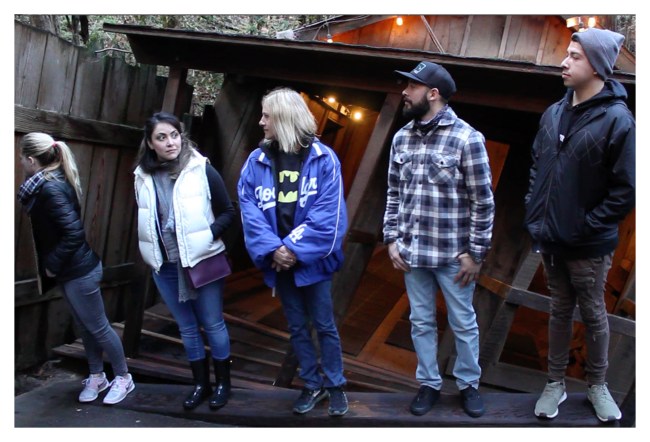
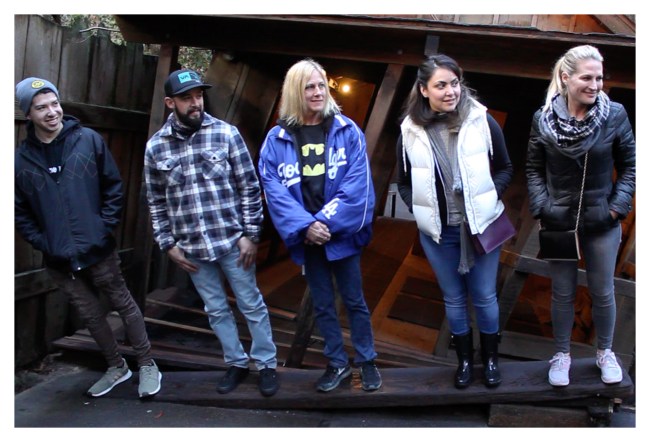
Just before the tour ended, Jack finally laid out three possible hypotheses as to what might cause the unexplained phenomenon inside The Mystery Spot. The first, the “official” theory, and one that sounds entirely plausible yet remains entirely unproven, is that deep underground a pool of magma is rotating in the direction opposite the earth, creating a “gravitational vortex.” Jack told us that this is the generally accepted theory behind many of the mystery spots around the world, and I wondered why no one was attempting to test it. So I asked.
“It would require a multi-million-dollar drilling operation,” Jack told me. “After driving down our road, you know we can’t afford that.” It was the first point Jack had made in almost an hour that I didn’t feel compelled to argue.
The second explanation, and Jack’s favorite, is that miles above The Mystery Spot a hole in the ozone layer causes light to refract in a way that makes everything appear warped and bent. Again, it sounded reasonable, but just as unverifiable.
It was Jack’s third theory that made the most sense to me. It wasn’t because it seemed more plausible, or that it might somehow be proven, but because it let me off the hook for not being able to crack the conundrum of The Mystery Spot. The theory, as Jack explained it, is that mold, fungus, mushrooms and spores are growing in a yet undiscovered cavern somewhere beneath the hillside, and are constantly pumping hallucinogens into the air above, keeping each and every visitor to this spot outside Santa Cruz completely and utterly stoned. As I saw it, that meant everyone, including me, was much too high to figure out The Mystery Spot’s clever trick. It also meant that my 9th grade science teacher finally had good reason to shut the hell up, and that I would end the tour with at least some of my self-respect intact.
After another bumpy ride down the driveway from hell, I got back on the road, finally headed for San Francisco. The extra days of planning time my spontaneity had afforded me didn’t seem to make a difference, because somehow my arrival coincided precisely with rush hour. After well over an hour of painful stop-and-go Bay Area traffic, I finally arrived at the Super 8 Motel in Berkeley, my nerves a little worse for the wear. In my newly typical spur-of-the-moment fashion, I had booked it along the way specifically for its proximity to the BART (Bay Area Rapid Transit) station, because driving in San Francisco is not something I particularly enjoy. Thankfully it’s a city where public transpiration can take you virtually anywhere.
The next morning, after another fantastic night of rest, I set off on foot to catch the train. It was an absolutely gorgeous day. There wasn’t a cloud in the sky, which for San Francisco is almost unheard of in February. Once I reached North Berkeley Station, I bought my round-trip train ticket and hopped onboard, headed for The Embarcadero.
In the sixteen years I’ve lived in California, I’ve been to San Francisco at least two dozen times. I’ve explored nearly every nook and cranny of the city − almost all of it on foot − courtesy of my friend Justin. He and I met in junior high, lost touch when I went off to college, and reconnected about ten years ago when Justin was living there. Over the course of my many trips to visit him, I came to expect two incontrovertible constants; Justin would always be up for a walk, and he would always unintentionally trick me into walking distances much greater than what he had initially specified.
The order of events would most often go something like this. We’d leave his apartment with the intention of heading to lunch (or some other landmark or neighborhood he wanted to show me) and I’d ask, “Should we grab a cab, or bus, or something?”
“No, it’s not far,” he’d always reassure me.
“How long will it take us to get there?” I’d ask. I added this step after a few visits, during which I came to understand that Justin’s estimate of “just down the street” would somehow become clear across town. It never really helped, though.
“About an hour,” he’d always tell me, without a hint of deceit. Then inevitably, three hours or so later, after my precipitously falling blood sugar had turned me headachy and hangry, we’d finally arrive at the place he’d picked for our meal.
“What?” he’d ask when finally noticing the depth of my irritation. In Justin’s defense, I always knew he never meant anything by it, and didn’t realize himself what he was doing − not before the fact, anyway. It was just a byproduct of his exceptionally high energy level, and often-dreamlike attention span. Over the years these experiences would drive home the fact that walking a city is the best way to get to know it. Yet, after exploring almost every square inch of San Francisco, there was still a popular tourist destination I’d conspicuously never visited: Alcatraz.
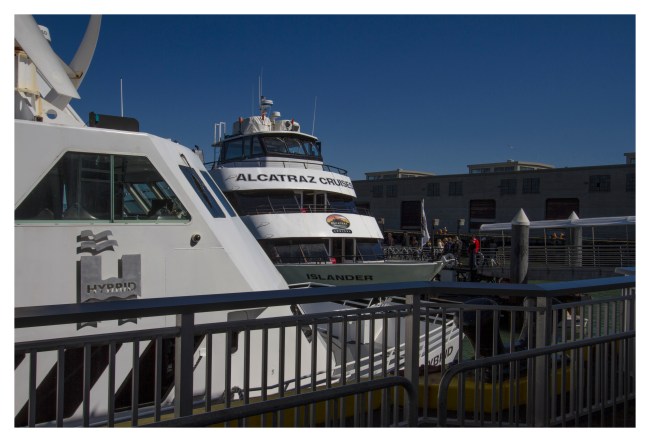
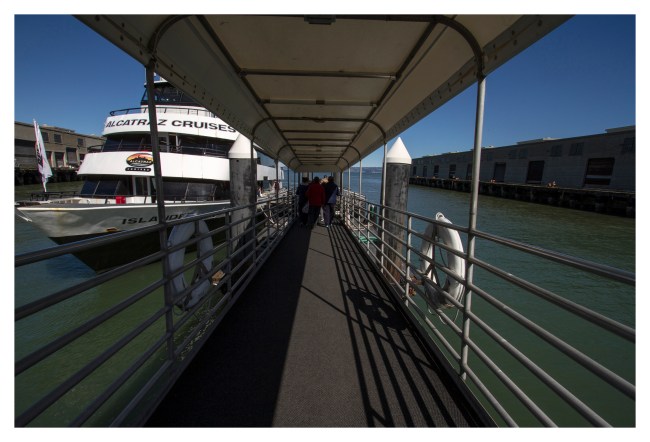
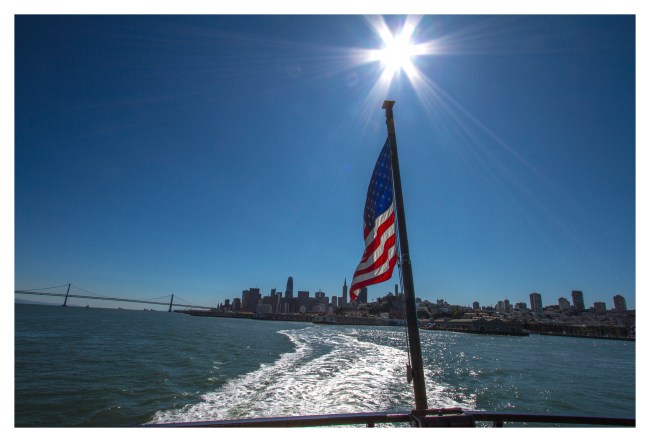
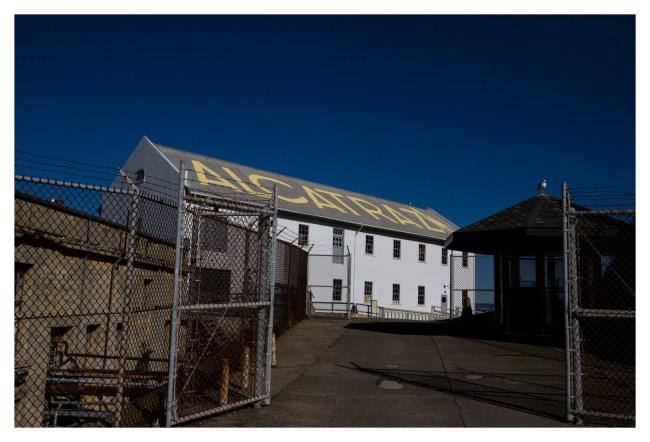
Before leaving the hotel that morning I’d booked passage on the twelve-thirty ferry to the island. It was a perfect day for a boat ride, so upon boarding I picked a seat on the deck and snapped pictures the entire way. When I disembarked, I found a National Park Service Ranger greeting everyone with a loudspeaker, and after a brief primer of the island’s history, he directed us to the barracks building for an introductory movie.
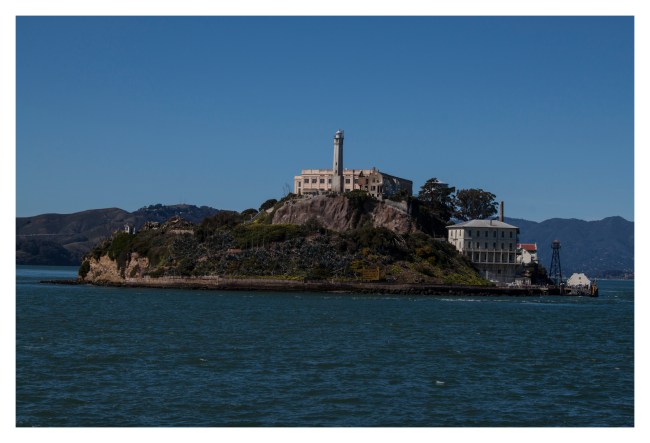
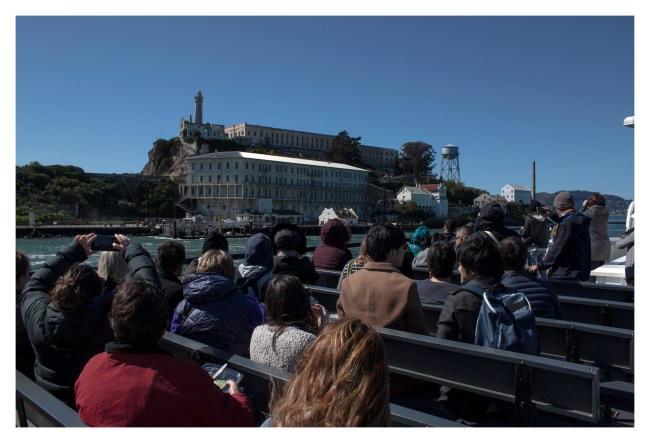
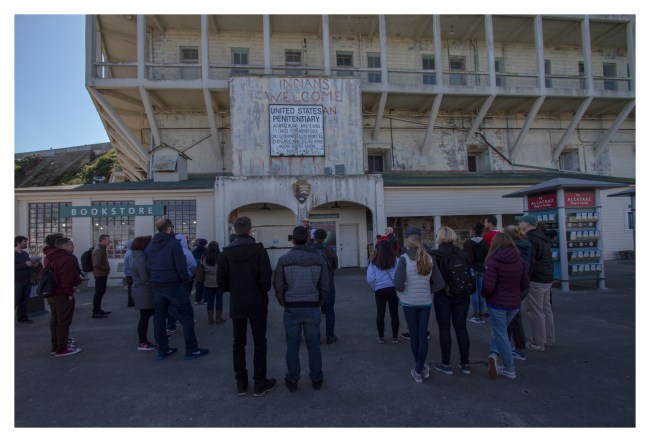
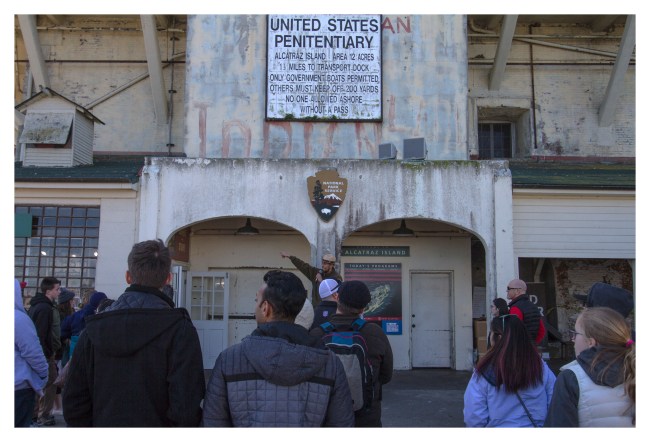
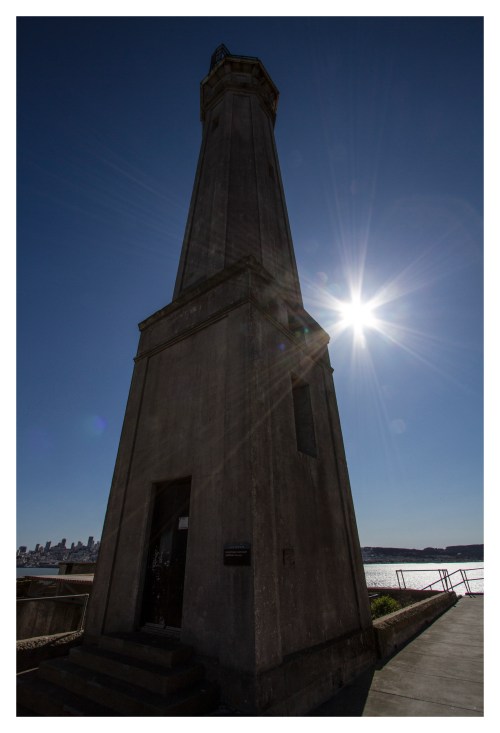
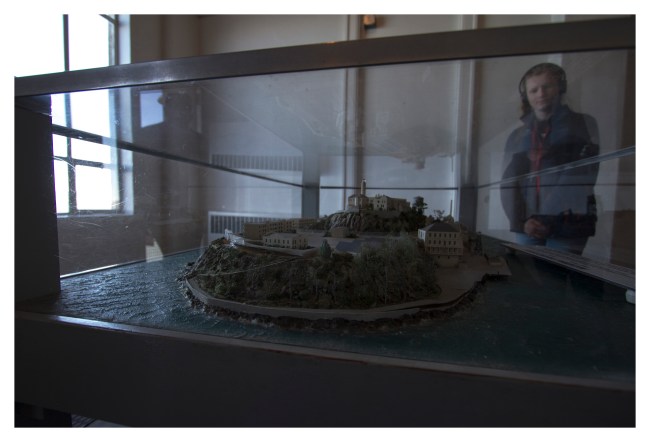
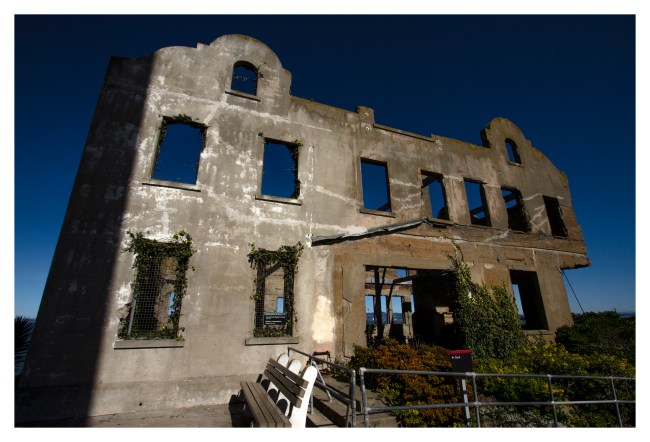
My first impression upon walking inside was that it felt like a bunker. In reading the placards the deeper I descended through its dim cavernous hallways, through doorways that were sometimes feet thick, I discovered my assessment wasn’t far from the truth. Up until then I had no idea Alcatraz Island had been first used as a military fort. For millennia the island had sat unoccupied, devoid of almost all life, until the Gold Rush began in California. Because of San Francisco’s growing population, and the increased level of ship traffic flowing in and out of the bay, it was decided the island was the best place to build a lighthouse. That lighthouse became operational on June 1, 1854 – around the same time that construction of fortifications on the island began.
Less than a decade later, the Civil War raging on the east coast, Union forces started to fear the possibility of a Confederate attack in San Francisco Bay. Their concerns led them to start drawing up plans to further strengthen Alcatraz. The building in which I currently stood, the “bombproof barracks,” was one of those projects. Completed in 1860, it is considered the only permanent fortification built on the West Coast during the Civil War. Other battlements came later, as well as over 100 canons in 1861. During the war more than 400 Union soldiers were stationed on the island.
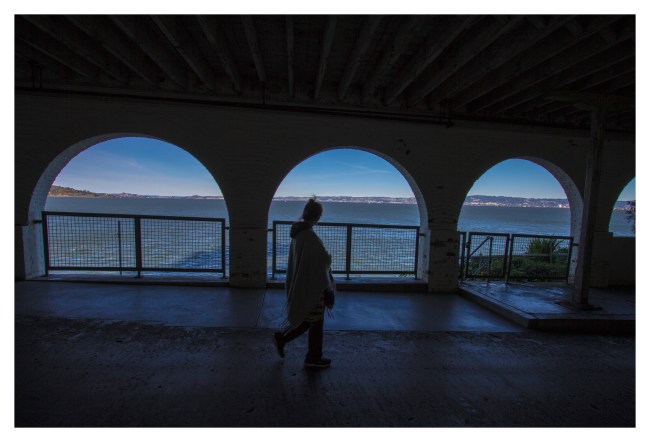
I made my way into the makeshift theater, which was located in an area where gunpowder had once been stored, and found a seat between two of the massive brick archways. A few minutes later the lights dimmed, and as the film unfolded, I discovered I knew even less about Alcatraz than I thought I did.
It turned out the island was home to a prison long before Al Capone arrived. In 1859, even before the Civil War began, its earliest facilities were used to confine eleven soldiers. During the war that number grew. Soldiers convicted of everything from desertion and treason, to rape and murder, were imprisoned on Alcatraz. In addition, Native Americans from various Hopi, Modoc, and Apache tribes, who during the second half of the nineteenth century were captured in one of the “Indian wars,” were incarcerated there. As the twentieth century began, the number of military prisoners continued to grow, and following the fort’s decommission in 1907, parts of it were torn down in favor of a huge concrete cell house. Regular army troops were eventually replaced by soldiers from the U.S. Military Guard, and in 1915 Alcatraz was renamed “United States Disciplinary Barracks, Pacific Branch.” Not long after, conscientious objectors to World War I became inmates on the island as well.
Alcatraz remained a military prison for almost twenty years, until the 1930s brought interest from another party – the newly created Federal Bureau of Prisons. They wanted a high-profile maximum-security facility to house high-profile gangsters like Capone, George “Machine Gun” Kelly, and Alvin “Creepy” Karpis. To them, Alcatraz was the perfect place. On October 12, 1933 the island was transferred from the War Department, which had operated the military prison, to the Department of Justice, and after almost a year spent modernizing the facilities, Alcatraz Federal Penitentiary officially began operation on August 11, 1934. For twenty years it held prisoners, but of 1,545 men who served time on what came to be known as “the Rock,” only a handful were notorious like Capone, Kelly, and Karpis. The rest were men who had proved to be troublemakers at other federal prisons, and men who had tried to escape − because it was thought impossible to escape from Alcatraz.
The one thing that began to stand out as the film progressed was how little I really knew about Alcatraz. Despite my aforementioned love of The Discovery Channel, I’d been ignorant to so much its history. I was beside myself when I learned that for 19 months, starting on November 9th, 1969, a group of Native Americans calling themselves “Indians of All Tribes” began an occupation of the Island. Granted it was a little before my time, but I don’t remember a single mention of it in any of my high school or college history classes. I found it absolutely fascinating that close to six years after the federal penitentiary had closed, a group of Native Americans chose Alcatraz as a place to make a stand. The cooperation between the various tribes was in itself historic, but what I found most enthralling was the fact that they offered to buy the island from the government for twenty-four dollars worth of beads, cloth, and other goods, the same value and currency Dutch colonists had paid for Manhattan Island. I loved the brazenness of it, and the poetic defiance, especially when I learned they pointed out that Alcatraz more closely resembled an Indian reservation, because of its useless soil, lack of game, and because it was all but completely isolated from the conveniences of modern America. It broke my heart to learn that what started out as an occupation hundreds strong, with positive media coverage and public support, eventually dwindled to almost nothing. By June of 1971 the government had retaken the island, and once again, with the exception of a lone caretaker, Alcatraz was left unoccupied. That is until the National Park Service was given control of the island, and ferries full of tourists started arriving.
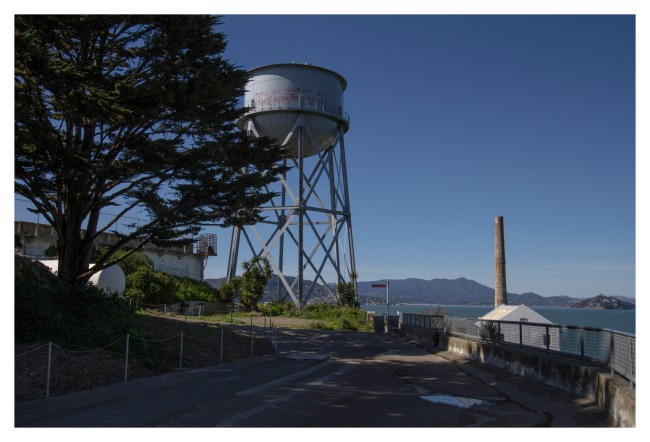
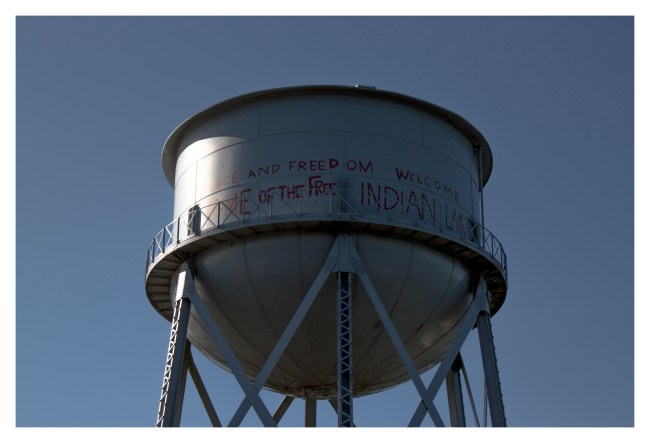
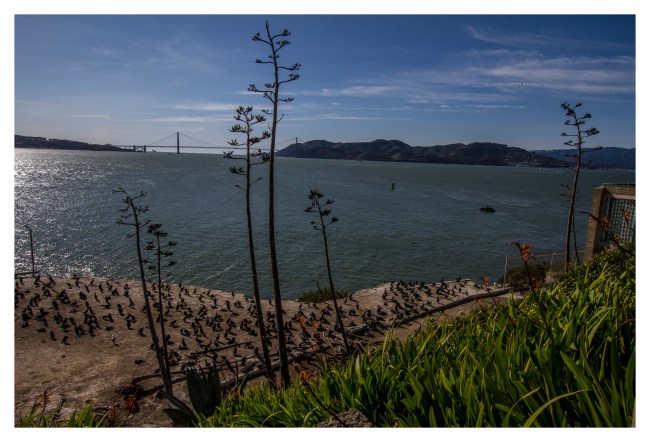
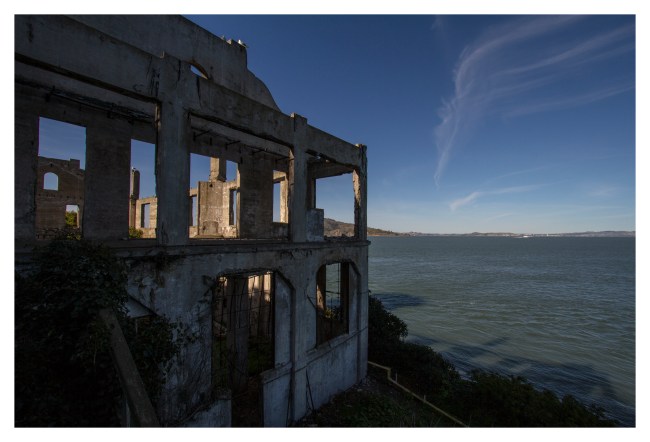
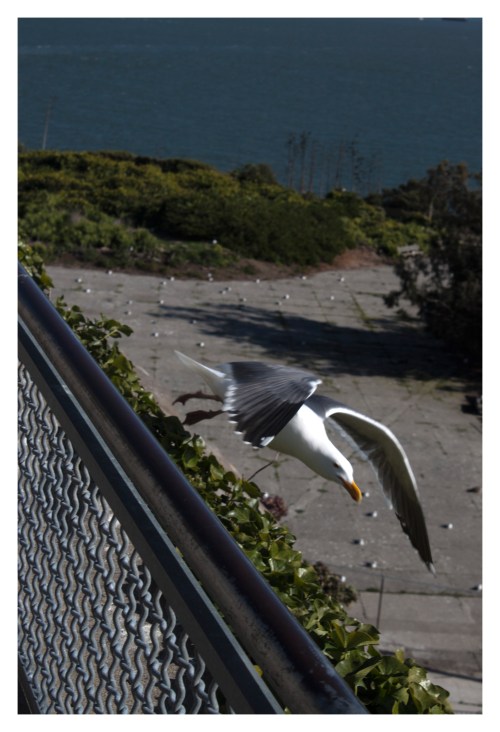
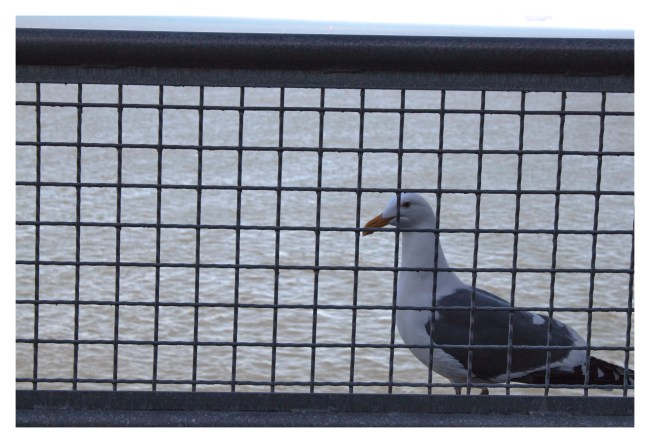
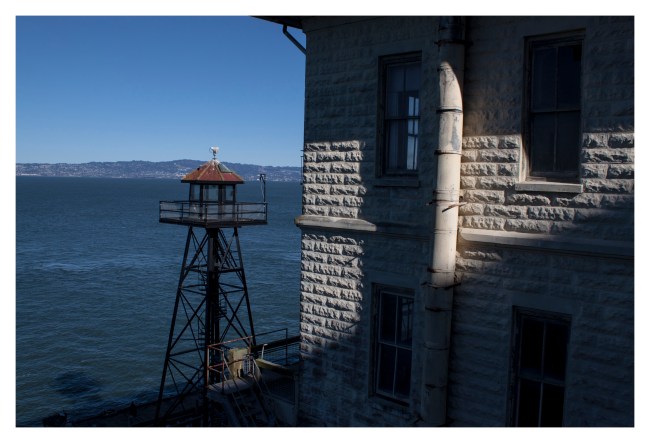
When the film was over, I made way out of the vast “bombproof bunker” and headed for the one place that I actually knew about before visiting Alcatraz: the cell house. I traversed the same wide concrete pathways and sidewalks that the prisoners had used after arriving at their new, horrible home, and the starkness of my surroundings made it all the more affecting. The buildings had a certain dull grayness to them, and everything felt exceedingly institutional. It was a prison, after all, and I didn’t really expect anything more, I was just taken with how drab and demoralizing it was. The place was just as lifeless as the Native Americans had noted. Except for scores of birds, and gardens that had been planted along the paths, the end result of topsoil the army had brought in by barge to protect Alcatraz from incoming artillery and cultivated to prevent erosion, the entire place seemed dead. In reading the placards about the plants, I was floored by the knowledge that years later, just a short distance from gangsters, rapists and murderers, the wives and children of some of prison’s staff went about their daily lives. They used the soil to grow crops, flowers, bushes and trees, and if not for them, Alcatraz would be an even more cheerless place today.
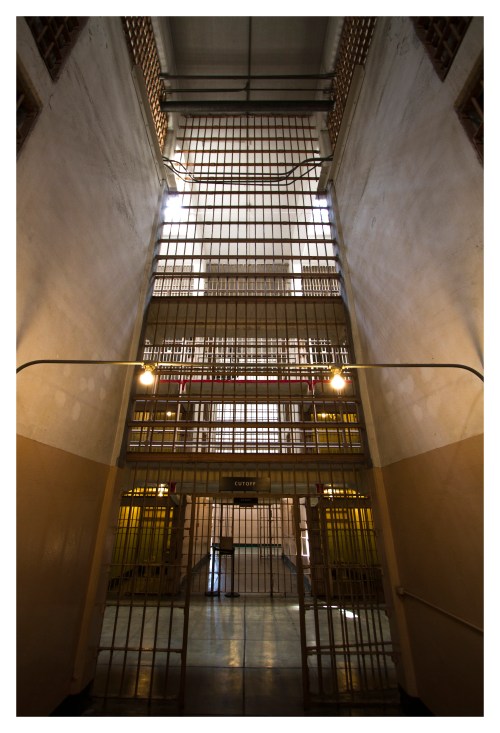
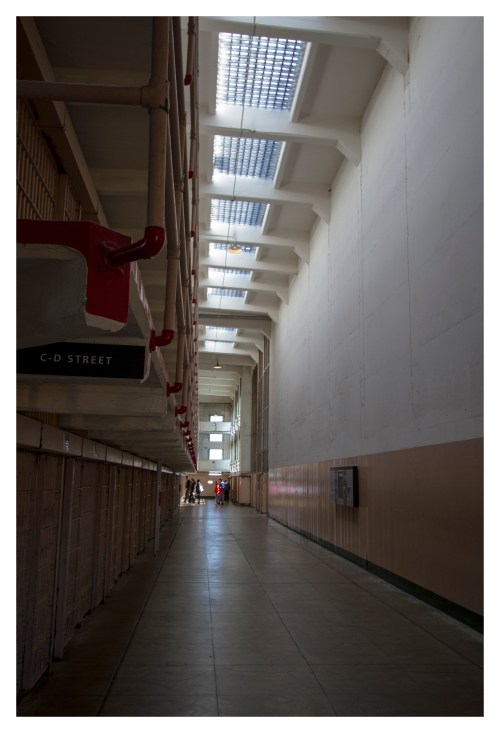
I arrived at the cell house, and followed signs directing me to where I could pick up my audio tour. After a labyrinthine walk through echoing stairwells and passageways enclosed by bars, I ended up in an enormous room full of showers. I found it jarring that the Park Service would choose such a location. Walking into that space, likely one of the most dangerous in the entire prison, to pick up a device that resembled a low-end iPod (except for its Walkman-like headphones), seemed almost comical, in a very dark way. As I snaked my way through the turnstiles, around the entire circumference of the shower area that sat in the middle of the room, I couldn’t help but play one of my favorite games. Since I’m obsessed with time travel, it’s something I often do. My fascination with temporal matters started with Back to the Future, my favorite film of all time, but over the years has grown into a kind of fixation. When I enter a room like this, a place that was once used for something much different than it is today, I can’t help but imagine a disruption in the space-time continuum unexpectedly merging the two very different points in time. Think about it. You’re a hardened criminal, cautiously showering in this overly inhospitable environment, making sure no one gets too close while trying to work out how you’re going to shank “Curly,” because he sang like a canary about your stash, and all of a sudden you’re joined by a roomful of tourists who are queued up around you like cattle waiting for their space-aged transistor radios. It would be a little jarring, don’t you think?
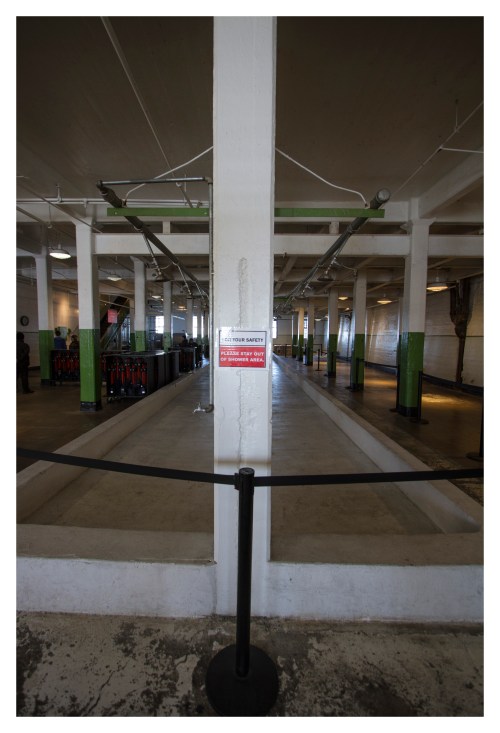
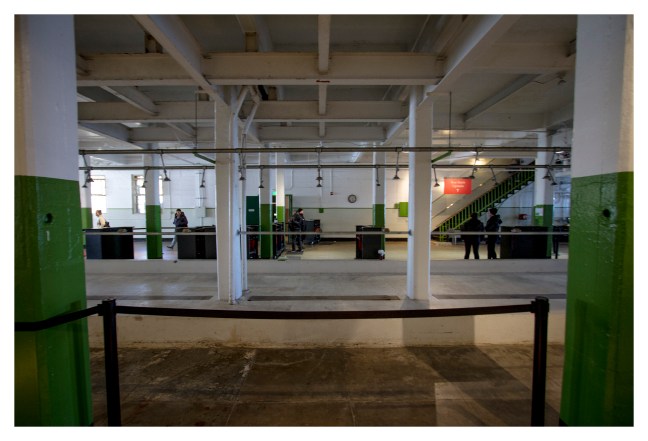
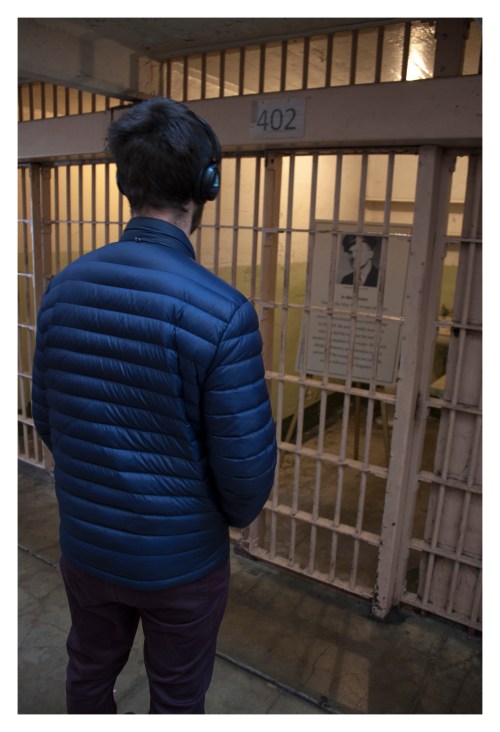
I collected my audio tour, and after another short walk through more stairwells and barred passageways, I made my way to the heart of the cell house, and the sign that marked the start of my audio tour. I put on the headphones, pressed play, and was greeted with the ominous words, “You are entitled to food, clothing, shelter and medical attention. Anything else you get it a privilege.” It was an unsettling prelude, and most certainly left an impression.
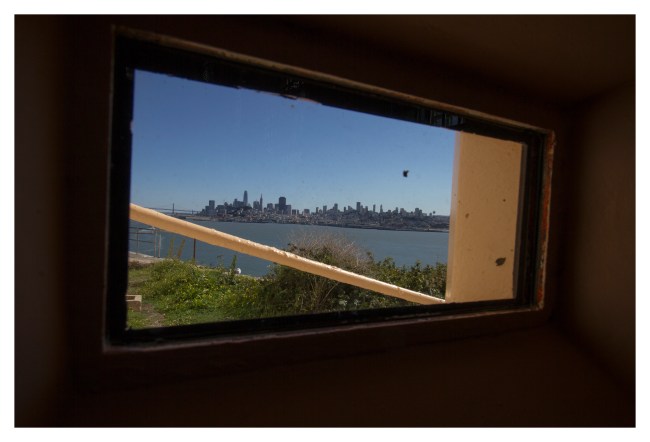
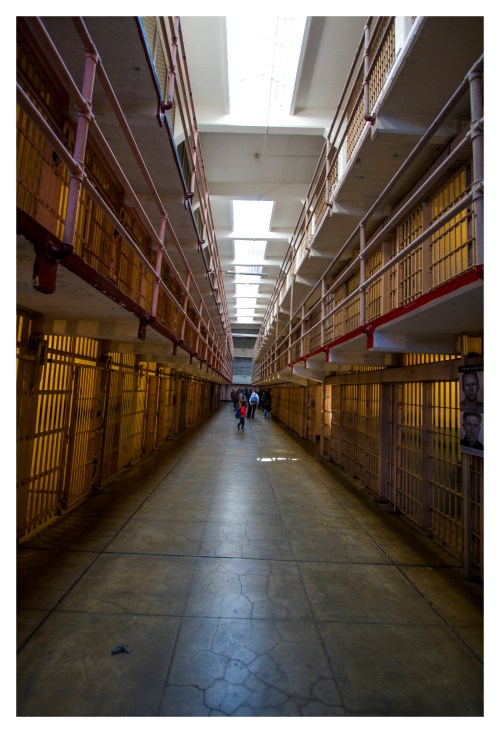
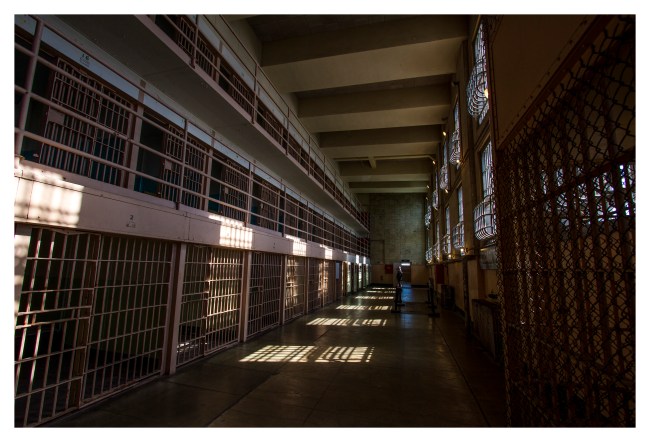
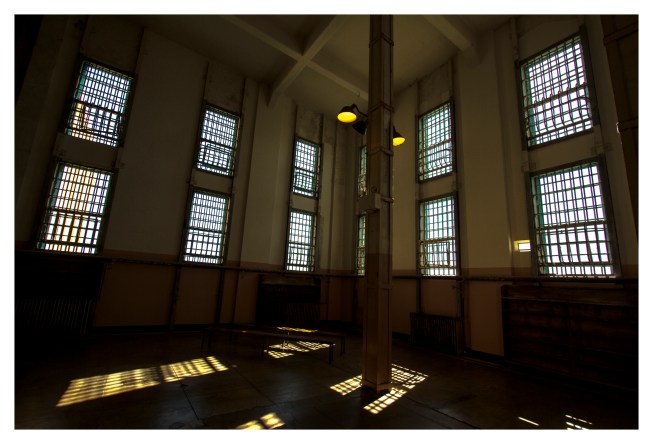
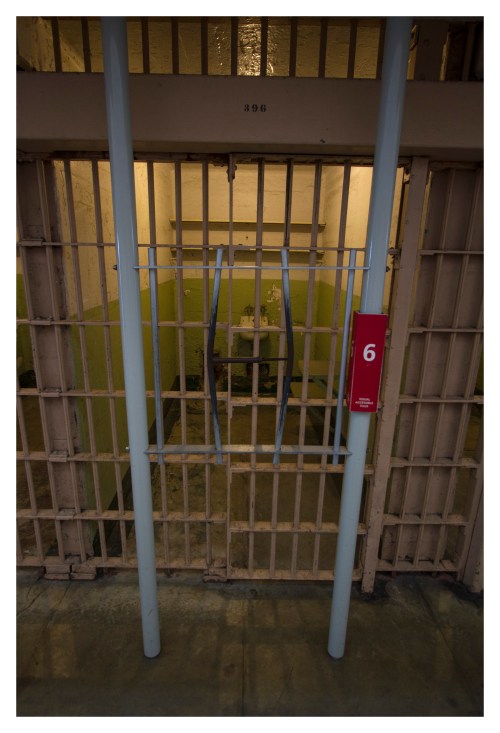
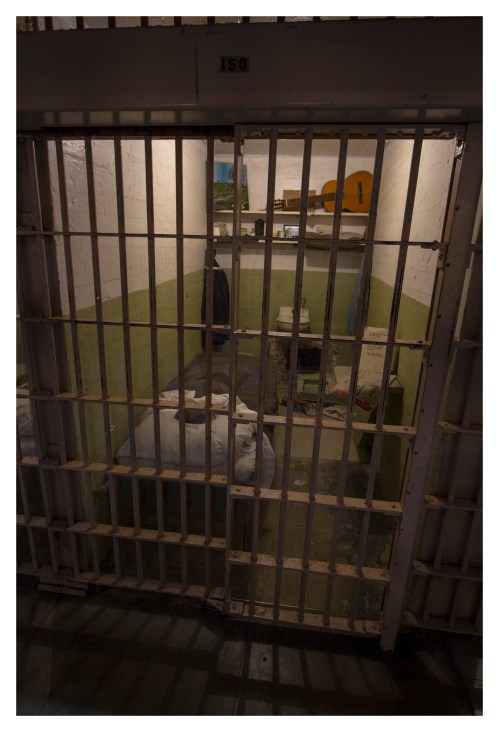
As I headed further into the cell house, I couldn’t help but imagine myself as one of the prisoners. Even the toughest among them must have felt at least some fear. The building was damp and miserable in a way that amplifies panic and desperation, and the tour was quick to point out that harsh winds on the island would often cause the cell block to howl without end. Yet the most awful thing that I learned about Alcatraz, the thing that still haunts me, is that with San Francisco just over a mile away, prisoners could easily see and hear the freedom on display just across the bay. Trapped in cages only a tad larger than your average closet, perpetually out of sight and mind, life moved on without them. The mere thought of spending twenty hours a day locked up like that scared me so straight someone could’ve used me as a ruler. It must have been excruciating, even if it was deserved, and I wondered if I would have been able to survive it.
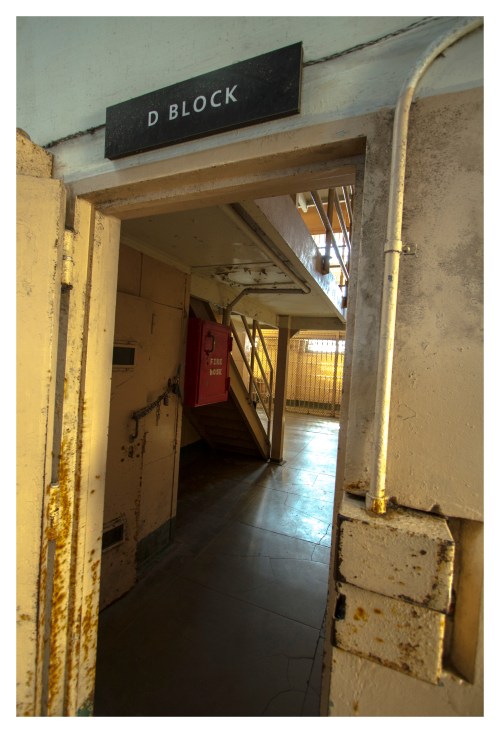
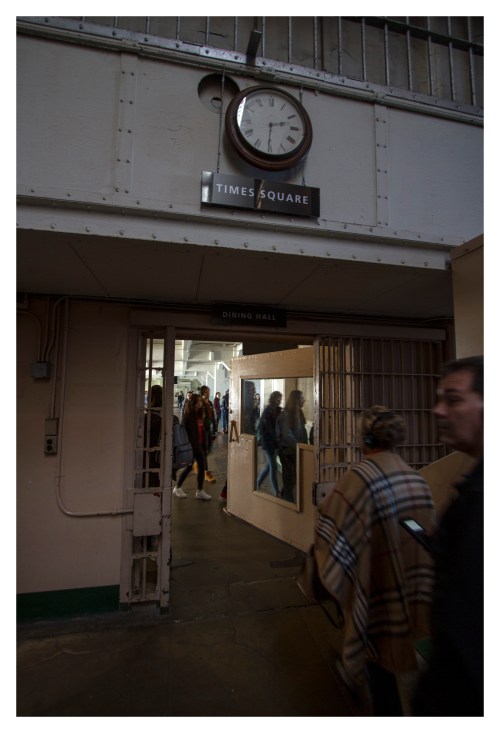
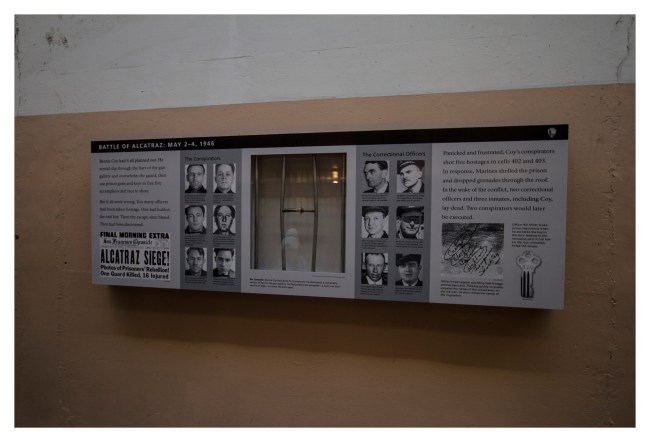
Mercifully, not ten minutes later, the feeling was somewhat abated when I found myself hopelessly lost. For some reason I always feel compelled to read all the placards, which is a lot of work especially when your camera keeps imploring you to find the perfect shot, but add an audio tour on top of it, one that doesn’t have a rewind feature, and you’re just asking for trouble. When the tour directed me to Times Square (a central point in the cellhouse where the only clock is located), I was somewhere around the corner finishing a placard about the Battle of Alcatraz (the deadliest escape attempt at the prison, which took the lives of two corrections officers, and injured eleven more). When it directed me towards C-D Street (or “Seedy Street”), I was reading about the escape attempt of June 1962 made famous in the movie Escape from Alcatraz (three prisoners disappeared into the water, two of them brothers, and were never seen again). I’d inevitably wander around for a bit, before eventually backtracking to a familiar point where I’d start the track over, and wait for the moment where I’d gotten sidetracked. Inevitably, not five minutes later, I’d start the whole process anew. It’s the reason it took me almost two hours to complete a forty-five-minute tour.
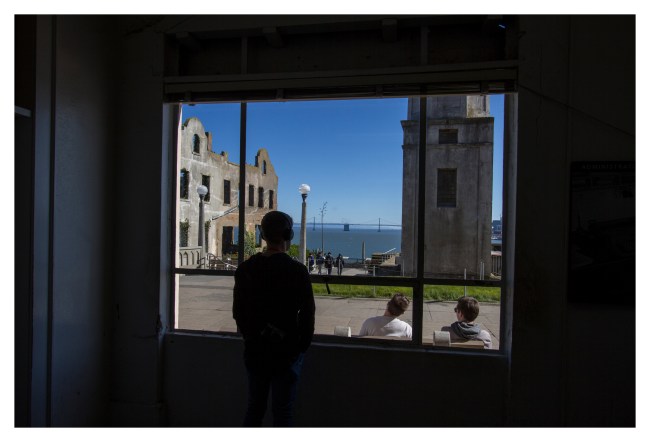
After wandering around for a while, and seeing what other sights the island had to offer, I hopped back on the on the ferry. It was just before four, and the plan was to meet my friend Fro at his office in Mill Valley when he got out of work at six, leaving me more than enough time get there. After disembarking, I called up public transit directions on Google Maps − which put me at his door in a little over an hour − and marched my way from Pier 33, where I caught the ferry, to the intersection of North Point Street and The Embarcadero, where Google told me I could catch the “Route 4 Northbound – Mill Valley” bus.
As I waited, I paid careful attention to each one that passed, patiently anticipating the arrival of the No. 4. Rush hour was just beginning, and the traffic was getting noticeably worse. Just shy of ten minutes later, I spotted a green and white bus with “4 Mill Valley” displayed on the large LED screen above its windshield. It slowed to make a left hand turn from The Embarcadero onto North Point Street, and I moved towards the shelter that stood just past the intersection, ready to catch my ride. Except after making the turn, instead of slowing so it could pick me up, the bus accelerated and sped right past me. I watched helplessly confused as it moved down the street, finally coming to a stop at the shelter in the next intersection, about a quarter-mile from where I stood.
Figuring Google had given me the wrong stop, I headed down the street towards what I assumed was the right one, and waited once more. Ten minutes later I spotted another No. 4 bus in the distance, making the same turn from The Embarcadero onto North Point Street. The difference this time was that it stopped at the shelter I had been standing at only minutes before. I watched dumbfounded as it picked up a passenger there, then pulled away from the curb and headed towards me. As it approached, I moved into the street just one step from the curb, in an attempt to make sure the driver knew I intended to catch a ride. It didn’t have the desired effect. For the second time that afternoon the No. 4 bus sped right past me, kicking up a storm of dust and debris and spitting exhaust fumes directly into my mouth.
I couldn’t figure out what in the hell was going on. I had waited at two separate stops. Stops where I’d seen the bus pick up other passengers with my own eyes, and at each of them I’d been ignored. I started wondering if The Mystery Spot had somehow caused me to pass into an entirely new plane of existence, leaving me completely invisible to the denizens of my original dimension. Was I now a man that was entirely undetectable? Would I be forced to wander the earth like Patrick Swayze in Ghost?
Just as I was beginning to panic, I noticed a family of five standing in and around the bus shelter behind me: a mother, father, their two teen daughters, and young son. They looked even more confused than I was, as if they had been stuck in the same ethereal predicament for much, much longer.
“Bus,” the father said as he approached me. Then he nodded and asked, “You’re riding?” He pointed at me, and then in the direction the bus had gone.
“Yeah, I’m trying to catch the bus,” I told him.
“Um…” he said, looking around. He motioned to his family, who I realized were examining the bus schedule positioned inside the shelter. “From Switzerland,” he told me. “Stand here?” he asked, pointing to the ground.
“I’m not sure,” I said. “I’m visiting too… and trying to figure it out myself.” Looking downhearted he nodded again, and then smiled.
“Danke,” he said, and moved back towards his family.
“You’re welcome.” I told him. “Sorry I couldn’t be more help.” Just as I said it I saw another bus approaching. This one was gray and red, and miraculously came to a complete stop just a few feet from me. As soon as the doors opened I approached, and found a middle-aged African American woman behind the wheel.
“I’m trying to catch the Number 4 bus,” I told her, “But I can’t figure out where it stops. I’ve already had two pass by me. I think this family is trying to catch it too.”
“I’m sorry, honey,” she said sweetly, “But I’m not sure. That’s a Golden Gate Transit bus. I drive for Muni,” (Muni referring to the San Francisco Municipal Transit Authority). “I think it should stop here, but I’m not positive.”
I thanked her, and she was on her way, leaving me no closer to figuring out the solution to my problem. It was almost a quarter to five, and the surplus of time I’d had at the start of my journey was now almost completely exhausted. I pulled out my phone, in the first stages of a full-blown panic, and searched Google for Golden Gate Transit, hoping that there was something on their webpage that would indicate their bus stops in the neighborhood. I found nothing.
A few minutes later, I noticed a man standing at the curb about twenty yards from the bus shelter. He was obviously waiting for something, but I couldn’t be sure it was a Golden Gate Transit bus. He could have easily been waiting for a ride, or a friend. I turned to consult the Swiss family, wondering if he might hold the missing piece of our puzzle, but found they had disappeared while I was busy on my phone, leaving me alone at the intersection. I stepped into the street, and moved towards this beacon of hope, looking for any indication that he might be waiting for a Golden Gate Transit bus. Right away I noticed a sign affixed to a to a steel pole protruding from the concrete about a foot away from him, but as I got closer I saw that it read “No Parking 3 PM to 7 PM.” Sure I was onto something, I continued my search, praying for any indication that there was a bus stop in his general vicinity, but I couldn’t find anything. Then it occurred to me that I should just ask him. That’s when I realized he had been watching me intently. Of all the people I’d been invisible to over the past hour, of course this guy could see me. When I thought about it, and some of the people I’ve encountered on the streets of San Francisco over the years, it made perfect sense. I had been walking around in the street. My head had been swiveling furiously and sporadically as I examined an area that, to him, was a whole lot of nothing. Honestly, I was probably a one-sided conversation away from appearing schizophrenic, and the look he gave me quite precisely communicated, “You must be crazy. Do not approach me. If you do you’ll regret it.” I decided to heed his warning, and moved back toward the bus shelter, where I continued to wait.
Not two minutes later I spotted another green and white bus as it came chugging towards me, blowing acrid black smoke into the air. I perked up, and started praying that this one would be it, until I noticed that it was marked No. 54. I instinctively took a step backwards, to let the driver know it wasn’t the ride I intended to catch, but the bus braked as it grew closer. “Great,” I thought to myself. “The only ones that stop are the ones I don’t want.” Except it soon became clear it was stopping for the man who still eyed me from twenty yards away. He nonchalantly got onboard when the doors popped open right in front of him, as if it was some kind of ordinary occurrence, not an act of otherworldly magic. I was left dumbfounded as the bus pulled away, my arms spread apart, palms up, still unsure of what exactly was happening. Once again I wandered over to the area where the man had been standing, to look for any indication that it was a bus stop, but once more I found nothing. That is until I noticed another steel pole jutting from the cement at a stark angle. It stood just a few feet from the “No Parking” sign, directly between two parking meters. There was nothing affixed to the top of it, making it look like some kind of industrial stem whose flower had been picked clean. The sight of it made me almost euphoric. I planted myself right next to it, and waited.
About five minutes later, for the third time, I watched as a No. 4 bus turned from The Embarcadero onto North Point Street. For the second time I saw it pick up another passenger at the intersection, and head towards me. As it approached I started waving my hand furiously while jumping up and down ever so slightly, to ensure the driver could see me, and so he might mistake my ever-growing desperation for absolute insanity. I swear to Louis Armstrong that I heard a flourish of trumpets sound as the bus, finally and for the very first time, came to a stop right front of me. It felt as if my future on planet earth had been secured, and my very existence validated.
I got onboard, bought a round-trip ticket, and found a seat. I watched out the window as we moved through the city, a journey that culminated with my fifth crossing of the Golden Gate Bridge − my first one as a passenger. I gazed back towards Alcatraz, and started hoping for an outrageous traffic jam. I couldn’t get enough of the view.
After we crossed San Francisco Bay, I made sure to keep an eye on the Google Maps app I still had open on my phone. I watched as the little blue dot ping-ponged back and forth to different points along the route we were traveling, a telltale sign that it was having trouble pinpointing my exact location. I also kept my eyes open for any indication of “Shoreline Hwy & Pohono St,” where the app told me I should get off. Upon buying my ticket it became clear to me that Google’s directions, in all their digital wisdom, had directed me to a commuter bus. Not a Muni or a BART bus, but the kind that people with cars catch in the suburbs in order to avoid the constantly snarled traffic in cities like New York and San Francisco. So there was no loudspeaker announcement from the driver, or canned computerized voice calling out each of the stops as we arrived at them. No, a person on this bus was expected to know where to get off, and of course, I had no idea.
I saw a big rectangular sign at “Manzanita Park & Ride Lot,” but the blue dot was hovering just south of where Google was telling me I needed to disembark, so I stayed in my seat. It wasn’t until after we pulled away that I realized I had missed my stop. I grabbed my backpack and hustled up to the front of the bus where I explained to the driver what had happened. He didn’t look impressed.
“I’ll let you off at the next one,” he told me curtly.
“Can I get a bus back?” I asked.
“I’d be easier to just walk through the marsh,” he said, and for a moment I thought he was joking.
“What?” I asked in a mild panic.
“Bothin Marsh,” he continued slowly and deliberately, as if I was a few shots shy of a Venti latte. “There’s a trail going back the way you need to go.”
“Okaaay,” I said, sounding justifiably hesitant.
We pulled up to the stop a few moments later, and the driver pointed out the door after he’d opened it. “Trail’s right over there,” he said.
“Thanks,” I told him, and hopped off the bus. The driver closed the door, and managed to rejoin the flow of traffic in record time, leaving me on the side of the road in what can only be described as a well populated middle-of-nowhere. I surveyed the enormous swath of wetland that lay ahead of me, just as a man walking his dog passed beside me.
“Excuse me,” I called to him. “Can I get to Shoreline Highway and Pohono Street from this trail.” He stopped and eyed me for a second, as if confirming the idiocy the bus driver had just assigned to me.
“Yeah,” he said dubiously, but offered nothing more.
“That way,” I pointed.
“Yeah,” he said with a nod, and continued to stare.
“Okay, thanks,” I said uncomfortably, and started walking in the direction he’d indicated, wondering if, between the two of them, it was the dog that was the conversationalist.
As I moved from the street into the marsh, the setting sun making me even more hesitant to embark down this strange path, I wondered if I would ever be able to get to the address where I was supposed to meet Fro. I knew it must be somewhere nearby, maybe just beyond the elevated road that crossed over the marsh in the distance. Unlike an hour before, though, I found some small comfort in the knowledge that I was no longer invisible, and once again seemed to be on the correct plane of existence. So what if everyone suddenly seemed to think I was a little soft in the head? Maybe that was just a clear indication that I was really home.
 Dislocated